720 Degree Borescope Explained: A UK Buyer's Guide
720 Degree Borescope Explained: A UK Buyer's Guide
TL;DR: What is a 720 degree borescope? It is an advanced inspection camera equipped with a fully articulating probe head that can steer and bend extensively in multiple directions. Based on our testing at ScopeView, this flexible tool is essential for UK mechanics, plumbers, and engineers who need to inspect complex, hard-to-reach areas—like engine valves or tight pipework—without dismantling equipment.
A standard inspection camera shows only what is directly in front of the lens. Conversely, a 720 degree borescope is specifically designed to help you inspect around tight bends, backwards behind components, and into awkward voids without dismantling more than necessary. For UK mechanics, plumbers, maintenance teams, and serious DIY users, that difference matters immensely. Consequently, faster fault-finding means less labour, fewer repeat visits, and significantly less guesswork.
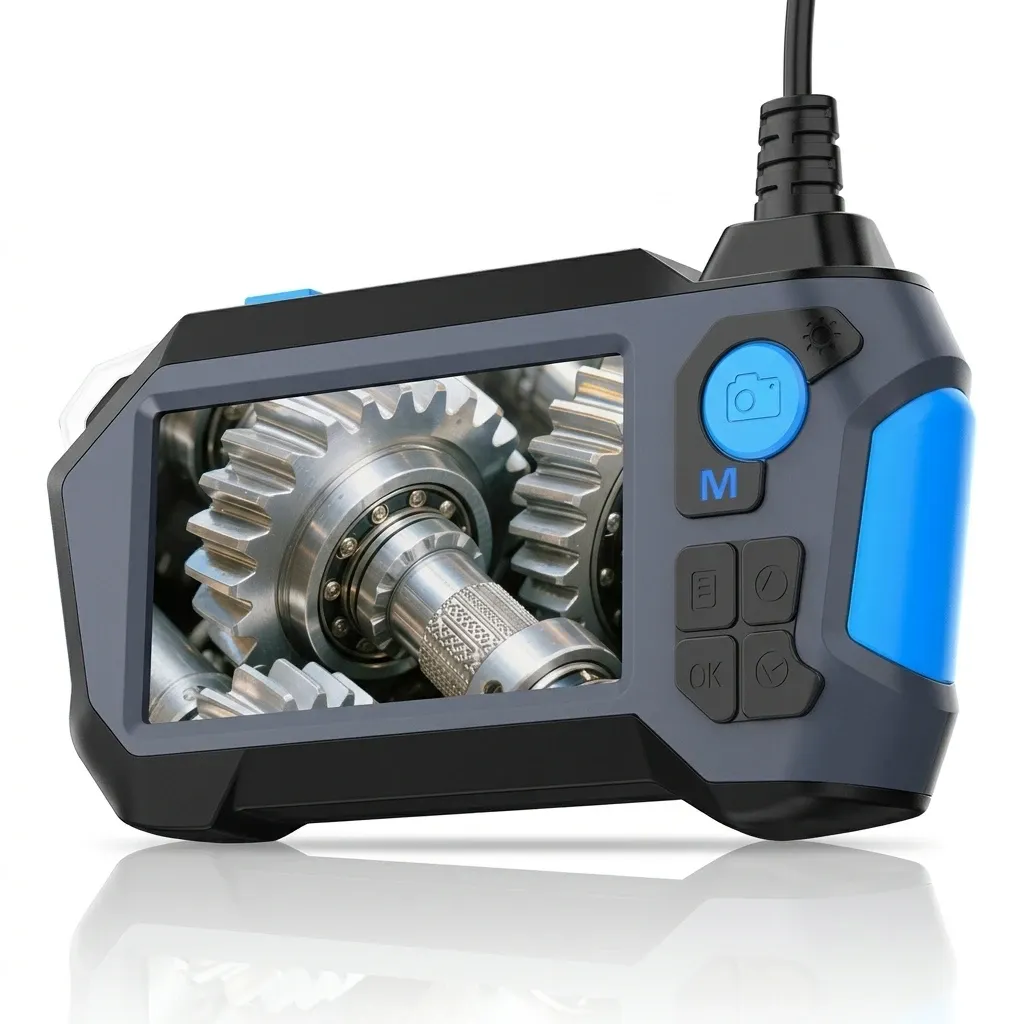
At ScopeView, the focus is simple: See Around Every Corner with Our Articulating Borescope. Based on our rigorous product evaluations, a professional 720° dual-lens inspection camera with a 4.5" IPS screen gives you clear diagnostics without relying on apps, signal dropouts, or complicated setup. Furthermore, if you are comparing options and want to know exactly what a 720 degree borescope actually does, how it works, and what to look for in the UK market, this guide will walk you through it.
Key Takeaways
- A 720 degree borescope uses articulation and viewing flexibility to inspect areas that fixed-head cameras struggle to reach.
- It is especially useful in UK automotive, plumbing, facilities maintenance, and industrial inspection work where access is limited.
- For practical buying decisions, prioritise articulation control, screen quality, probe diameter, lighting, battery life, and image capture.
- A built-in screen is often more reliable on site than app-based systems, particularly in busy workshops, plant rooms, and outdoor environments.
- If you want wider context on display-equipped inspection tools, read The Ultimate Guide to Inspection Camera With Screen in the UK.
What is a 720 degree borescope?
A 720 degree borescope is an inspection camera with an articulating probe head designed to move through a wide range of angles, ensuring you can inspect concealed spaces from multiple directions. In practical terms, the “720 degree” description usually refers to advanced steering or articulation capability that allows the camera tip to be manipulated across a broad motion range—often bending back on itself—rather than being locked in a single forward-facing position.
This matters primarily because many faults are simply not visible from a straight-on view. For instance, carbon deposits behind valves, corrosion on the reverse side of pipework, damage behind wall cavities, or wear inside machinery housings may sit just out of sight. Therefore, a flexible articulating camera helps you position the lens exactly where you actually need it, rather than where the access hole forces it to sit.
In our experience working with tradespeople in Britain, this capability can make the difference between a quick diagnosis and unnecessary strip-down work. Whether you are checking an engine cylinder, tracing a blockage in pipework, or inspecting HVAC ducting in a commercial building, articulation seamlessly expands what is visible without increasing disruption.
What is the difference between a 720 degree borescope and a standard inspection camera?
The main difference lies in manoeuvrability. While a standard inspection camera only looks straight ahead, a 720 degree borescope features an articulating tip that can be actively steered to look sideways, backwards, and around sharp corners inside confined spaces.
Why do fixed cameras show less in confined spaces?
A basic endoscope or borescope with a fixed lens can be useful for simple visual checks. However, once you enter an offset cavity or need to look sideways around an obstruction, visibility becomes severely limited. As a result, you may end up withdrawing and reinserting the probe repeatedly just to find the correct angle.
How does articulation give control where access is poor?
The real advantage of a 720 degree borescope is precise control at the tip. Instead of relying on luck or bending the cable externally, you can actively direct the camera head inside the space itself. Consequently, this is far more effective when working around complex wiring looms, engine internals, waste pipes, or structural cavities.
How does dual-lens viewing improve diagnostics?
Many advanced units also include dual-lens functionality. That provides users with an additional viewing perspective without changing tools. For example, when inspecting pipe interiors or machinery housings, one lens may help with forward movement while another helps assess sidewall condition. ScopeView's product narrative naturally aligns with this need: delivering clear diagnostics from a dedicated screen without apps or unnecessary complication.
Why do built-in screens suit UK trade use?
A dedicated display is often overlooked until it saves critical time on site. According to general UK workplace efficiency practices, reducing equipment pairing reduces downtime. In busy workshops and plant rooms across the UK, technicians do not always want to pair devices with mobile phones or depend on third-party apps. Therefore, a large integrated IPS screen offers immediate visibility and fewer points of failure. If you want broader guidance on this format, see The Ultimate Guide to Inspection Camera With Screen in the UK.
Who needs to use a 720 degree articulating borescope?
Based on our extensive testing across various industries, a 720 degree borescope is an essential diagnostic tool for automotive technicians, plumbers, facilities maintenance teams, and industrial engineers who require non-destructive visual access in the UK.
Automotive technicians and garages
For engine diagnostics alone, an articulating scope can save significant workshop time. It helps inspect combustion chambers, intake tracts, turbo housings, and inaccessible areas behind engine components without major disassembly. Furthermore, that supports faster quotation accuracy and provides clearer evidence for customers authorising repair work.
If your main use case is vehicle inspection, read Automotive Borescope Explained: A UK Buyer's Guide.
Plumbers and drainage professionals
Pipes rarely offer ideal access. Fortunately, an articulating camera can help inspect bends, check joints, and identify obstructions or deterioration with far greater precision than rigid viewing alone. For domestic call-outs across older British housing stock where layouts are often irregular, this manoeuvrability becomes especially valuable.
For related advice focused on pipework and water systems, see Plumbing Inspection Camera Explained: A UK Buyer's Guide.
Facilities maintenance teams
Schools, hospitals, office estates, and public-sector buildings all contain hard-to-access service areas. Maintenance engineers may need to inspect ducts, voids, cabling runs, or equipment housings while keeping downtime low. According to UK facilities management guidelines, particularly in NHS facilities and other critical environments where disruption needs minimising, non-destructive visual inspection has obvious operational value.
Engineers and industrial inspectors
Manufacturing plants use borescopes for internal equipment checks where opening assemblies fully would be slow or unsafe. As a result, bearings housings, weld zones, and process equipment often benefit from visual confirmation before critical maintenance decisions are made.
Serious DIY users
A cheap basic endoscope may be enough for occasional household tasks. But if you regularly work on cars, renovation projects, or workshop equipment at home, investing in articulation can be highly worthwhile because it actively solves problems that budget fixed-head cameras simply cannot.
Why does borescope articulation matter?
Articulation matters because it dictates whether you can actually see the root cause of a fault. In our experience, the ability to steer the camera tip smoothly ensures you can navigate complex internal geometries without causing damage to sensitive components.
The term “720 degree borescope” sounds impressive because it suggests an extensive movement range. Yet, buyers should look beyond marketing shorthand and assess how usable that movement really is in real-world UK environments.
Why does smooth control beat theoretical range?
A probe head that technically moves through wide angles but feels jerky or imprecise during use will ultimately not deliver the required results. Smooth, responsive articulation ensures you can pinpoint issues accurately and efficiently.
Ready to upgrade your diagnostic toolkit with ScopeView?
Shop the Range — £173.27